Throughout the
beginning of time in the Pre-Historical era people started the craze of art by
using the simplicity of formal elements
for their cave art and sculptures. Although that they were done in simple lines
and color they still managed to communicate and describe well what they were
intentionally thinking.
Throughout history, in the progression through art
movements, painters started to create their own style but they weren’t able to
do what they wanted because other people with higher titles obligated them to
do what they requested and by this they managed to manipulate people to their
own believes and intentions. In some periods of time artists started to get
annoyed by this fact, therefore by their own creativity and their feelings in
their time, they started showing their own projections into the paintings;
showing the people that they are an important value. For example: Michelangelo
– Sistine Chapel and Goya – La familia de Carlos IV.
 |
| Title : Lascaux Cave Location: France |
 |
| Artist: Michelangelo Title: Sistine Chapel Year: 1508–1512 |
 |
| Artist: Goya Title: La familia de Carlos IV Year: 1800–1801 |
As years passed, artists started breaking the elements into their own power by breaking up the shape of the figure, losing all the paresis proportions, using only one color or a mix up. During the Impressionism era, artists like Monet, Morisot, Renoir and some others were a few of those artists who wanted to paint on inspirations such as landscapes and modern life throughout open air paintings which they were reflecting their inner self’s rather than continuing on the past historical art. They started to give more importance on how to capture light, movement and the atmosphere around them where a bright color palette was also used.
 |
| Title: The summer, Poppy Field Artist: Claude Monet Year: 1875 |
On the other hand the
Post-Impressionism which included Cezanne, Van Gogh and others, managed to break
again from the Impressionist style and continue more on expressing their deep
emotions. Their paintings are most popular this time but during their time, people
were still accepting their art in progress due to the big change. Their art was
done with a lot of formal elements such as; a good amount of lines that even when
applying them they created texture and movement and a lot of light and bright
colors that with these they still managed to make an aesthetic sense out of
it.
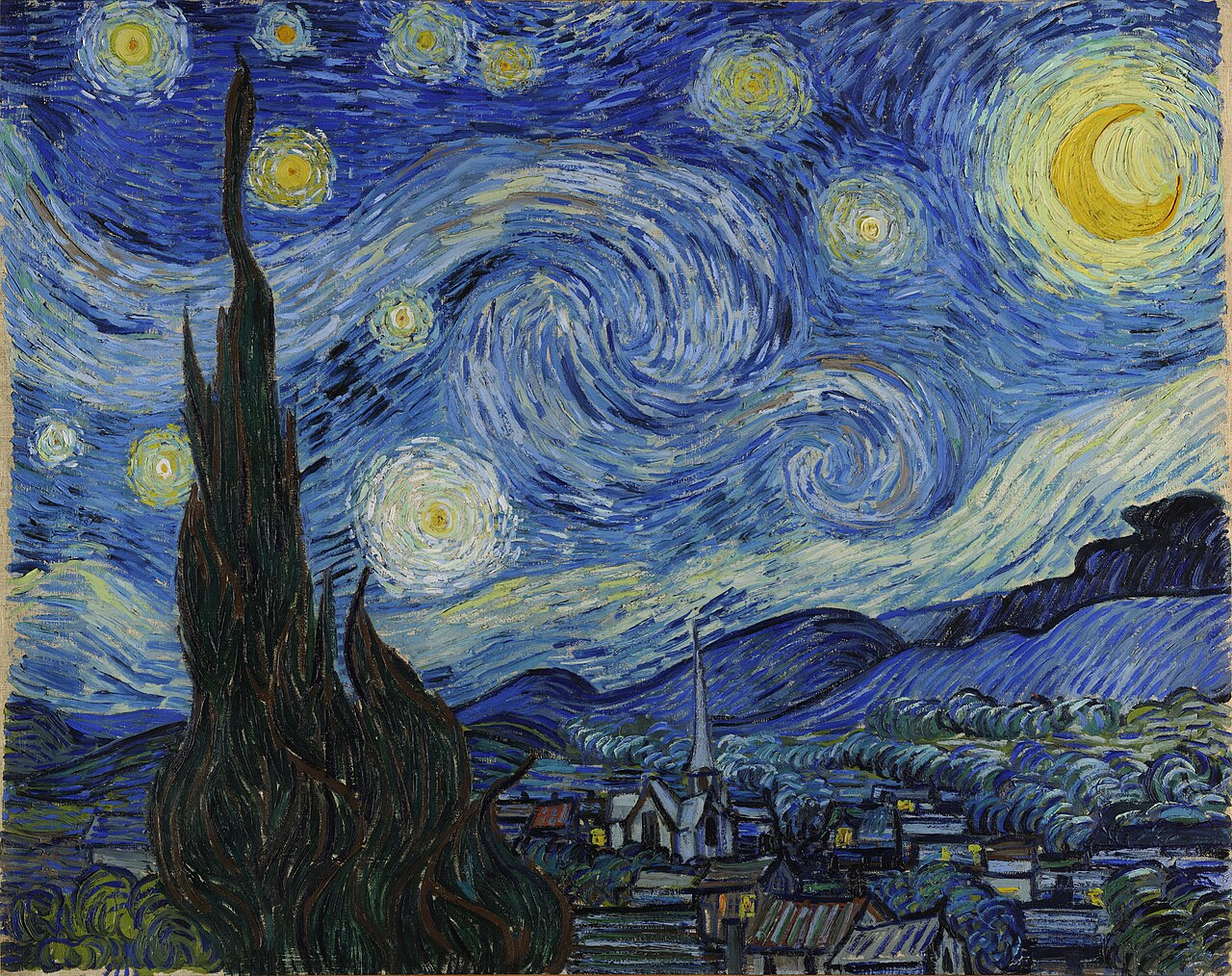 |
| Artist: Vincent VanGogh Title: The Starry Night Year: 1889 |
 |
| Artist: Vincent VanGogh Title: Self Portaite |
Van Gogh stated two
quotes which I found quiet relevant to the subject:
‘’I put my heart and my
soul into my work and have lost my mind in process ‘’ – Van Gogh
‘’Occasionally in times of worry, I’ve longed to be stylish, but on second thought I say no – just let me be myself – and express rough, yet true things with rough workmanship’’ – Van Gogh
By this he is stating
how painting was the only thing he loved and sacrificed everything for, but as
much as it did good for him, it still lead him to total absent despite the fact
that this always lead him to believe in himself throughout his work and never
followed the herd from the past techniques.
References:
Admin, 2016. 54 Memorable Quotes by Vincent van Gogh. [online] Quote Sigma. Available at: < http://www.quotesigma.com/54-memorable-quotes-by-vincent-van-gogh/ > Accessed 16th Dec. 2016.
Anon, 2016. The Visual Elements of Art. [online] Artyfactory.com. Available at: < http://www.artyfactory.com/art_appreciation/visual-elements/visual-elements.html > Accessed15th Dec. 2016.
Moffat, C., 2007. Prehistoric Art & Ancient Art - The Art History Archive. [online] Arthistoryarchive.com.Availableat: < http://www.arthistoryarchive.com/arthistory/prehistoricart/ > Accessed 13th Dec. 2016.
Voorhies, A., 2016. Post-Impressionism | Essay | Heilbrunn Timeline of Art History | The Metropolitan Museum of Art. [online] The Met’s Heilbrunn Timeline of Art History. Available at: < http://www.metmuseum.org/toah/hd/poim/hd_poim.htm > Accessed 18th Dec. 2016.
References:
Admin, 2016. 54 Memorable Quotes by Vincent van Gogh. [online] Quote Sigma. Available at: < http://www.quotesigma.com/54-memorable-quotes-by-vincent-van-gogh/ > Accessed 16th Dec. 2016.
Anon, 2016. The Visual Elements of Art. [online] Artyfactory.com. Available at: < http://www.artyfactory.com/art_appreciation/visual-elements/visual-elements.html > Accessed15th Dec. 2016.
Moffat, C., 2007. Prehistoric Art & Ancient Art - The Art History Archive. [online] Arthistoryarchive.com.Availableat: < http://www.arthistoryarchive.com/arthistory/prehistoricart/ > Accessed 13th Dec. 2016.
Voorhies, A., 2016. Post-Impressionism | Essay | Heilbrunn Timeline of Art History | The Metropolitan Museum of Art. [online] The Met’s Heilbrunn Timeline of Art History. Available at: < http://www.metmuseum.org/toah/hd/poim/hd_poim.htm > Accessed 18th Dec. 2016.

No comments:
Post a Comment