Thursday, 30 March 2017

Debate on Conceptual Thought

·         Conceptual art started in the mid-year 1960s, which worked out it way as a movement till the 1970s but it’s still begin used as an important manner nowadays. It allowed artists to produce works with a good background meaning rather than the finished art.


  • It can be anything, allowing the artist the availability to use whatever material they see most important to portray their idea. This could lead to performance art or writing skills.
  • By this it is also allowing the person to be more open to the society of how he thinks about everyday life such as politics, health etc.. which will allow him to going in different direction to use in his art.
  • As a personal opinion i see that even in daily school routine it is the conceptual thought that is most important because if you don't have any idea or what you want to project to the viewer with a valid meaning than you are at the edge of the cliff but if you have a strong concept which you want to work on it will guide you to use any type of material that goes well with the concept.

Example of artist using conceptual art:


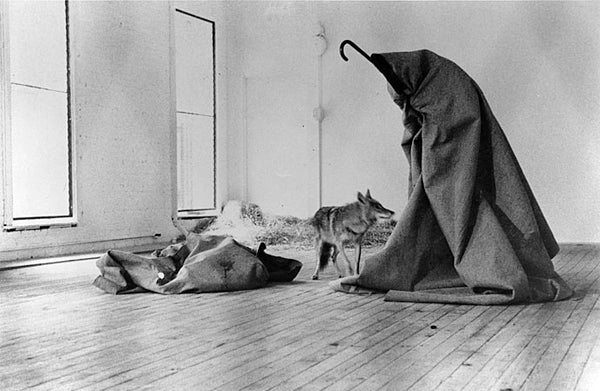
    Image result for ’ I like America and America likes me ‘
    Performance : Action
    Title : ’’ I like America and America likes me ‘’ 
    Year: 1974
  • Joseph Beuys had done a performance in which shows a sense of action. Which he is basically locked himself in a room for a period of 3 days with a coyote and wrapped himself in felt fabrics . Which by his actions he was reflecting his believes on how the anti-Vietnam was stance and the damage done to the American continent and native cultures. 
       
  Research in general:
Image result for urinal marcel
Marcel Duchamp, 'Fountain' 1917, replica 1964
·         While watching a video which they were discussing on how conceptual art is seen I managed to see how the artist who was interviewed made the presenter and the protagonist wear a white tracksuit, which made both of them identical. By asking the artist what is his idea of the tracksuit he replied to him that the white tracksuit is the vessel which resembles a work of art begin work as part of the installation while interviewing him.

·         While in the interview with Marcel Duchamp he told him that he was being blamed for the death of art and without hesitation he answered that he was delightful to take the fault in his name because it was his intention to create something fresh which will not please everybody.
  • By all means by replying that it was his intention is already a concept within his own thoughts which he managed to visualize it by using a urine, placed on a stand with his signature, in which by this made his art look more like applied philosophy


References

Anon, (2013). Conceptual Art Movement, Artists and Major Works. [online] The Art Story. Available at: http://www.theartstory.org/movement-conceptual-art.htm [Accessed 26 Mar. 2017].
Joan4567, (2008). All You Need to Know about Conceptual Art. [online] YouTube. Available at: https://www.youtube.com/watch?v=Hzh0TTrnS2o [Accessed 28 Mar. 2017].
mrogershorton, (2013). 12. Conceptual Art. [online] YouTube. Available at: https://www.youtube.com/watch?v=uNTEcOdnsoU [Accessed27 Mar. 2017].
Tate, (n.d.). Conceptual art. [online] Tate.org.uk. Available at: http://www.tate.org.uk/learn/online-resources/glossary/c/conceptual-art [Accessed 27 Mar. 2017].


Saturday, 25 March 2017

Confusion

Throughout the journey of the blog i was recording every elements that i came across on my thesis in which incorporates how art is begin used in therapy and what is its effects. Which i was able to learn how the formal elements are a great importance to to the message they are able to set out front he painter of the viewer which also helps them to express them self in anyway they want without the need to talk in anyway.

But i started also looking at different section in which i could also start looking into maybe i could also get some bits and pieces in which i could relate or open up more to it. 

Showing psychology theories
  • Astrology
  • Zodiac sign
Showing different connection
The art history period
  • Prehistory
  • Ancient Greek art
  • Renaissance art
  • Modernism and abstraction
  • Post modern art

  1. Art in context
  2. Theories of art
  3. Summary and prospect

Art and the eye- Giving a good definition on how the eye basically works with different light

 The visual could be brought down through out generations ?
  • Showing a sense of human behavioral responses
  • Showing how the brain will work in different age sections
  • Showing by time how mathematics and science worked hand in hand to make the understanding of theoretical principals
Give a basic information through out the history - Maybe choosing a particular era
  • Art and the eye
  • Art and the brain
  • Perceiving scenes
  • Perceiving pictures
  • Motions in art
  • Color in art
  • Visual aesthetics and art
  • Visual aesthetics and nature
  • Evolution and art
  • Balance
  • Shape
  • Form
  • Growth
  • Space
  • Light
  • Color - Different types of culture can be influenced
  • Movement
  • Dynamics
  • Expression 


Friday, 17 March 2017

Art is the cure !

As in the previous blog i talked about the Alzheimer disease which left the artist William Utermohlen completely stranded between himself and his art and how it shows his progress throughout his diagnose i will be reflecting again but on a different artist.

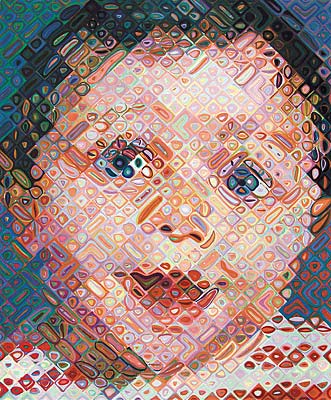
Chuck Close is mostly know for his photo-based portraits in which they are done in a huge large scale. During his time he was diagnosed with a rare spinal artery which left him parlayed for his entire life, but by this it didn't stop him from the one things he loved and managed to find another way around it and see how he will managed to make it work. Since he was paralyzed he wasn't able to move his arms a lot so he manage to make a strapped around his wrist and forearm which allows to keep the brush in hold while he paints.
Since his works are done on really large canvases he find it much more easier if he divides the canvas into small sections by this to him his comparing to to a new vocabulary in the making in which that it is build up one by one throughout the process giving enough time for each one. When his work are viewed from a close view you managed to see only patch of solid color either red blue or any type of color near each other this is obviously done due to his condition but when his work is viewed from a different perspective it is allowing you to see the full work, you will be impressed on how he managed to portraits the face in the exact highly detailed finish as if it was just had been photographed but in a more abstract way.
Image result
Emma
2002
Photorealism

From his work we can see how art allowed him to open new doors for him and helped him to gain confidence enough to create these magnificent pieces rather than just giving up even tough they were made in the exact same manner as art sometimes works.

References

Close, C. and Biography.com Editors, (2015). Chuck Close. [online] Biography. Available at: http://www.biography.com/people/chuck-close-9251491 [Accessed 16 Mar. 2017].
Pace, (n.d.). Pace Gallery - Chuck Close. [online] Pace Gallery. Available at: http://www.pacegallery.com/artists/80/chuck-close [Accessed 16 Mar. 2017].
The Art Story, (n.d.). Chuck Close Biography, Art, and Analysis of Works. [online] The Art Story. Available at: http://www.theartstory.org/artist-close-chuck.htm [Accessed 17 Mar. 2017].

Friday, 10 March 2017

The consequences of conditions

Throughout my normal research i stumbled on a blog post on the ' My Modern Net' website in which their was a post written by Jenny Zhang done in August, 11, 2014 in which her she is talking about a particular artist which had suffered from a particular disease called 'Alzheimer'. Which basically in know as another form of dementia in which basically makes the person suffer from memory loss which by time they start forgetting things important to them which further more effects their thinking and their behavior. Even tough that their isn't an official treatment to cure these type of condition their are certain type of treatments which help ease the effects and improves their daily life routine, but as time passes by it seems to get worse by the second and that what was happening to this particular artist.

William Utermohlen was diagnosed with this type of disease at the age of 61, which is mostly comment through out that certain age, by time he was encouraged to go into a nursing home which will help him to get all the attention he needed but for him his only treatment was to draw which helped him to reflect more and most especially helped him to understand his type of condition and what it is doing to his body.By the use of different media it also allowed him to see how he can reflect himself in different ways most important in different color tones.  I think that by doing this it was also a guide line for him even said in the blog since he started to forget more everyday his previous work always helped him to remember.

His artwork was only based on his self-portraits seeing how he was making a good connection between himself due that he was separated from the entire world by due to his absence people can now see and admire his skills and how he managed to use it to show how devastated it was to be in that certain position. Seeing his work chronologically at first you see a a detail drawing of him self and through out the years they started to become more abstract. As by looking at the pictures them self you can also see and feel the emptiness he was enduring throughout the time which allows you to imagine him in that position.

Self Portrait (Yellow)
William Utermohlen, 1997
oil on canvas, 35.5 x 35.5
In the Studio (Self-Portrait)
William Utermohlen, 1996
mixed media on paper, 45.5 x 32.5 cm
Blue Skies
William Utermohlen, 1995
oil on canvas, 152 x 122 cm


References

2017, B., Kunstmuseum, 2. and Film, P. (2017). Self-Portraits. [online] Williamutermohlen.org. Available at: https://www.williamutermohlen.org/index.php/11-artwork/self-portraits/22-self-portraits [Accessed 9 Mar. 2017].
alz.org, (n.d.). Alzheimer's Disease & Dementia | Alzheimer's Association. [online] Alz.org. Available at: http://www.alz.org/alzheimers_disease_what_is_alzheimers.asp [Accessed 9 Mar. 2017].
National Institutes of Health, (2016). Alzheimer's Disease Fact Sheet. [online] National Institute on Aging. Available at: https://www.nia.nih.gov/alzheimers/publication/alzheimers-disease-fact-sheet [Accessed 9 Mar. 2017].
Zhang, J. (2014). Powerful Self-Portraits Reveal Artist's Descent Into Alzheimer's Disease. [online] My Modern Met. Available at: http://mymodernmet.com/william-utermohlen-alzheimers-self-portraits/ [Accessed 8 Mar. 2017].

Saturday, 4 March 2017

Conclusion

The artist Domingo started out by writing the title of the talk on the canvas which he than continues doing in every story he starts to talk about which is allowing him to record everything throughout one piece. At some point he ask the viewer to close their eyes and imagine them self in the Pre-historic era were the cavemen were using cold blood to paint figures from imagination, exploring different tools/materials and showing a starting way of documentation which is indicating that art started at the beginning of humanity.

He is stating also how in past life Picasso said that in every person their is an artist hidden away waiting to be seen but how are we to keep it safe and pure when we grow and reveal it to the real world?, so by this he is giving other examples like Salvatore Dali that he was kicked out of his country due to the dictatorship and Van Gogh which he cut off his own ear by this he is comparing the artist to himself telling us that he also have his inner demons that hes not pleasant with and he still manages to overtake them by using art which allows him to relax, exploring a new world of your own and make it how beautiful you want.

Showing that something beautiful will manage to change your mood and vibes such how music and food works - by finding your comfort zone and will help you ease the pain away. Related to this example he managed to express himself throughout his personal experience were his son had to go through surgery and had to be kept in hospital and by seeing his boy their helpless left him also helpless without energy to do nothing and all he could do was paint seeing how his boy is going to look or whats hes going to be when he grows up all, all with the help of a positive vibe helped him get through his difficult time and use it as a self therapy.

By this I research that I made throughout these sources I managed to see how they work hand in hand showing how they can all be developed together. In further research, because this subject is still evolving throughout their methods, meaning and practices; new resources could also be found but with what I have found now are a good start in my project and I will be able to show more results in how art can be something useful in everybody’s lifestyle and not just used as a hobby; but will be able to heal, translate and relate.

References

TEDx Talks, (2015). The healing powers of art | Domingo Zapata | TEDxSyracuseUniversity. [online] YouTube. Available at: https://www.youtube.com/watch?v=XnIrnBnjTmc [Accessed 3 Mar. 2017].


Saturday, 25 February 2017

The use of videos

Moving on, I started making more research throughout the internet where I found some video were they are testing how art changes the person view and feelings. so basically at the beginning they get like 5-6 different people with different ages and they started telling them to write down their current level of happiness in that moment unaware of whats going to happen or what its going to be used for.

Than they had to write down again on a piece of paper the list of important things to them which either made them happy or supportive throughout their life and assigning them with an individual color and also giving a color for them selves by this they making them art of the list and a starting point. 

For the canvas a basic human body line was draw giving them the idea that they are using them self to reflect what they want and by starting they presented their color in the middle of the body following up by any color which is most important to them and placing them in any manner they like. When they were finished the art therapist started to ask them about the first color they used some asked that it was family, dads or woman in which these are the most important elements that you base your life on and are a good value to yourself after that when they were done they wrote again on the sheet were they wrote the level of happiness and it came 3 times more than they wrote before.

By this experiment it shows how art truly changes the person in a blink of a second and helps them more to improve in heir daily life routine .

References


SoulPancake, (2013). How Does Art Therapy Heal the Soul? | The Science of Happiness. [online] YouTube. Available at: https://www.youtube.com/watch?v=BN2rTaFUlxs [Accessed 25 Feb. 2017].


Friday, 17 February 2017

Creativity is still a mysterious element

Furthermore throughout more development on my research I stumbled on a book called ‘’Using the creative arts in therapy, A practical Introduction’’ written by Bernie Warren. Although the words fit perfectly with the title chosen for my project, I still didn’t rely a lot on it so I started looking at the front cover and noticed that it’s the second edition; this means that the book over the years was updated. On the other hand this book has listed a section of practical use in which will help me learn more how these sections go throughout the process even though I won’t perform them myself I will still be acknowledging it more into a deeper perspective which will help me understand more how it is being implanted and helping the people attending it. To support more this paragraph, the book starts by saying ‘’ Why creative therapy?” , by this he already started building an argument / discussion between the viewer himself and the book; making it more as a thoughtful reading.

 ‘’ Creativity is still a mysterious element of the human brain. For persons who have some form of disability, tough, there are too often few if any opportunities to realise their potential. (Page 37, chapter 5). In the second section is where the practical section discussing the preparation and planning acknowledging me for who I’ll be working with, what I am expecting to see or meet, the type of place the session is being held in, if the people attending the session are suffering from any type of conditions or they are just attending for any type of closure? Furthermore I will start to build up my research on how this is helping out the people throughout development / time and seeing if they had found it helpful for them.  The materials were also listed in this section due that they hold an important value, giving a basic information on each material it is still evaluating the purpose, meaning and use of every one of them such as; Pencils, Charcoal, Pastels, Paints etc.. But you will also need to take health and safety into consideration.  By this the people will be able to show any type of destructive behavior, anger and / or tranquility throughout the materials they use, knowing  the purpose on how and why they used that specific item. This information is very supportive to me because due that I will be attending these sessions as one of them I will be fully aware that supervision will be a necessity and will allow me to work the same as them and afterwards, if any discussions will be made onto the artworks, I will be able to use the information given in the book which will allow me to understand it better. It is also mentioned in the book that other materials such as ceramics is used; to allow them to create 3D sculptural forms which shows how art is changing throughout time not only by idea but also by exploring different materials.  ‘’ The artist’s eye is always seeing, sensing and feeling the atmosphere around at the moment’’. (Page 35, chapter 5).

ReferencesWarren, B. (1993). Using the Creative Arts in Therapy. 2nd ed. London: Routledge.

Friday, 10 February 2017

Research throughout books

Throughout my research i managed to read into some interesting books which gave me usefull information on my specific topic.

So for the beginning I started reading through the book, ‘’ The psychology of visual art, eye, brain and Art’’ Written by George Mather. While reading throughout the book, an interesting list of illustration had caught my eye therefore some quick reading was done to get a simple idea of what the subject is about and on what kind of valuable information it gives or if it’s related. At first it was giving a basic knowledge throughout history starting from the Pre-Historic till the Postmodern. By this, it is showing how art has started and evolved throughout time and human history by the use of materials and diversity. To add more support to the research, he is also giving knowledge on Art theories describing how every individual is different in supporting other disciplines. 

It is also showing how the brain works and manages to process different opportunities/Ideas making the unique and valued. By getting this basic information on how art was started and it evolved throughout time I was able to see that it was all legit information and will be useful throughout my research development. The most importance that was given to the book was that I look at the information given at the back to get a basic feel on what the book is about, I also saw that the publisher was a reliable one because it was printed in the university of Cambridge therefore I was on the safe side and because of the fact that it was first published in the year 2014 it meant that it’s still up to date.
References:


Mather, G. (2014). The psychology of visual art. 1st ed. New York, United states of America: Cambridge University press.

Saturday, 4 February 2017

Thats It!

Through out my research on my specific topic i managed to stumble into a person which used the exact exercises that i was talking about into her own assignment. I managed to see the assignment in person which allowed me more to see how she used her body language and gesture to explain from were it all started and what was the cause of this idea.

As for the idea, it was based on a certain type of health problem she had been encountering for a long time through out her life, which by this she started to feel different from others and that they aren't fully aware of what she is going into and feeling. By this she found this opportunity which lead her to show off her idea through out her artistic creativity.

While seeing her artwork i was amazed how it all managed to fit all together and how she managed to build up her artwork quiet well as she gave quiet importance to the composition, design and colors which are similar to her health problems. But during the presentation i saw that the person although was feeling proud that she managed to achieve something throughout her work she fell into an emotional state, by this i was able to indicate how the person had but her heart into this project and giving me the indication that she put her heart into it.

With this research i will be able to carry out more investigation and see also how different people from different studies can be effected with this type of exercise.

(The person mentioned in the blog is to be kept Anonymous and permission was granted to use her story)

Saturday, 21 January 2017

Improvement

Another video which I found useful and is also a Ted talk was ‘’Art’s healing power by Pamela Jacques’’ (Uploaded by TEDx Talks). In here it is showing a more practical way of how art can be performed by sharing her simple message of healing and in a way that it is supported by live painting. By this, she is showing how the body and the brain are corresponding with the canvas creating thoes random lines/Fades. With the use of colours added into her piece she is able to create bright and contrast colours with the use of brushes and fingers. With every word she is creating a texture of its own; making the art pieces unique and self-expressing. I think is a good example due that the story had been based in her lifetime.

Reference:

TEDx Talks, (2014). Art's healing power | Pamela Jacques | TEDxGraterfordStatePrison. [online] YouTube. Available at: https://www.youtube.com/watch?v=z1CEL_l8hTc&t=282s  [Accessed 17 Jan. 2017].

Saturday, 14 January 2017

Developing throughout our DNA

Moving on, I started making more research throughout the internet where I found some Ted talks on the YouTube channel which work really well with the concept mentioned in the last blog. One of the videos was called ‘’Art as empowerment: the virtue of art therapy by Ann Lawton’’ (Uploaded by TEDx Talks). Where in this talk she is giving out her own personal experience throughout her life, how she was always using art to visualize herself - showing means of symbolism done by simple lines. Despite the fact, she kept building on her talk by saying how she managed to build up her personality by the use of her artistic love which by time she is able to share her knowledge to help other people who suffer from any kind of problems. Another good example which also goes hand in hand with the topic is how art has been implanted for thousands of years into the human’s DNA, which by time always evolves; that when we were just children we used to like to draw lines with bright colors on paper or on the wall. This was done because we used to feel good about it and continued doing it that by then, we started obeying certain rules and by the time we got older we started hearing people say that art is not a good career to work on and confuses us by other subjects. This relates mostly to the same question I asked in the beginning how it could be able to change the view or how the brain processes this. Sometimes it’s so scary to produce something because they could be judged or pointed at but by this it’s allowing them to step forward and in their darkest fear they will be able to show courage and hope which are done from the simplest random materials such as newspapers.

References:

TEDx Talks, (2016). Art as Empowerment: The Virtue of Art Therapy | Ann Lawton | TEDxUWRiverFalls. [online] YouTube. Available at: https://www.youtube.com/watch?v=bPszGBfjuOY&t=168s  [Accessed 13 Jan. 2017].

Saturday, 7 January 2017

Are we developing ?

Throughout this academic semester i started thinking about on which subject i'm going to base my thesis project on and by the means of research throughout the use of the internet such as PDF files/websites and physical books i was starting to get a glimpse on which path i'm going to follow.

At first i was a bit lost and confused but by always narrowing down the theme and focused research i will be able to have a bulletproof project, which due the further months i will be building y physical project which will support my writing section. At first i saw an interest in Art therapy, for me its something new which i have little knowledge of but i managed to get basic information which lead me through out interesting subject and how by time its evolving not only that its helping people but the artist it self can make good use of his own art. To compare more between different eras i started doing some research on how at that time art was used as somewhat the same was as art therapy. But by the results that i found during the impressionist and post impressionist artist were showing more their idea of how they are seeing art in which they were also creating it. Their art was filled with bright colors, hard brushstrokes in which created movement and giving a sense of direction and also they managed to capture a good amount of natural light which made their paintings feel life like even dough they were painted in the proper way.

By this i was able to get a clear idea of when art therapy was being implanted and how it is evolving now a days, which by the use of it may help future artist and people.